
Class 10 · BISE Annual Examination 2027
Class 10 Chemistry Pairing Scheme 2027
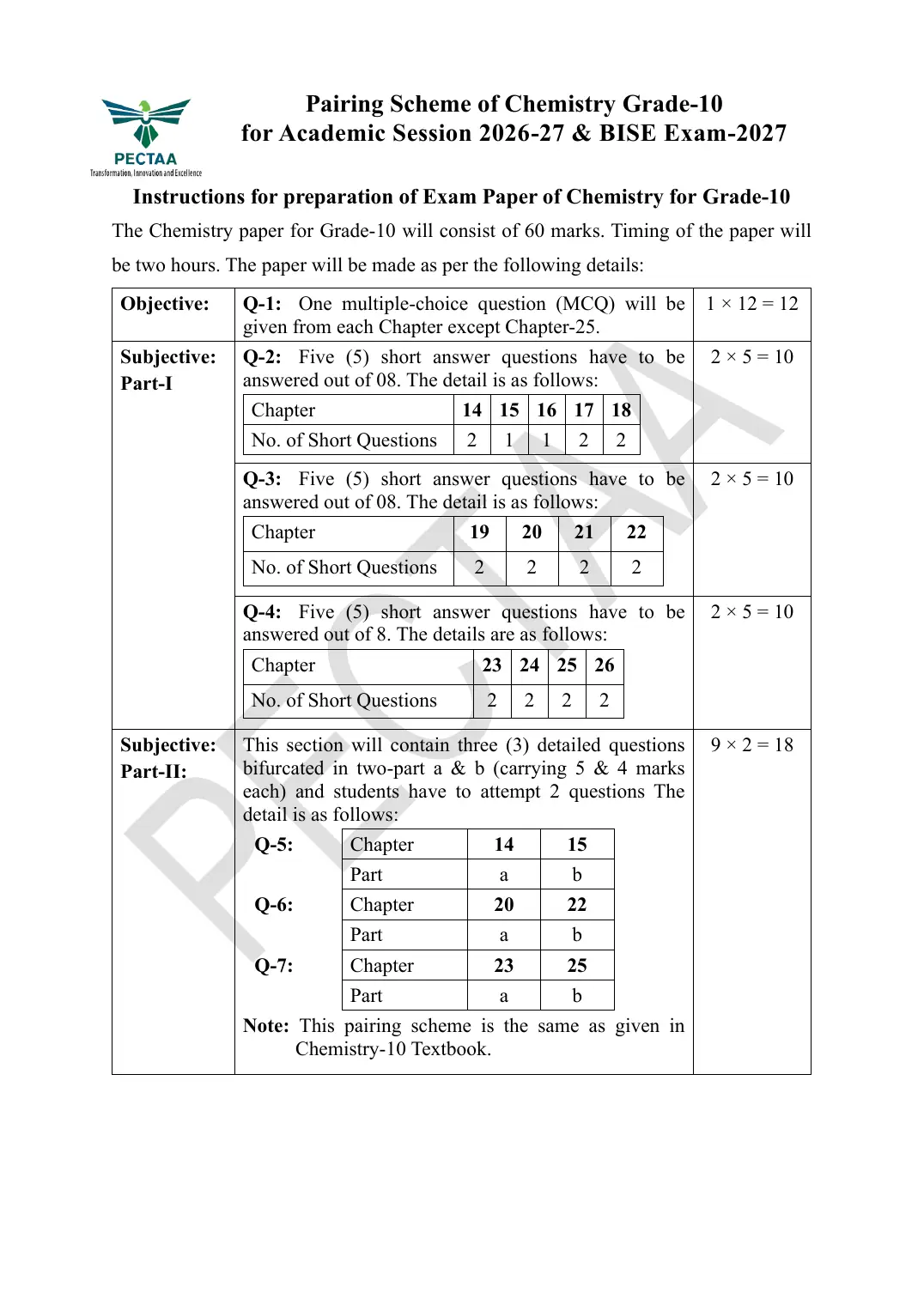
How the 2027 Class 10 Chemistry board paper is put together: every question, where it comes from, and what it is worth.
Punjab Boards · Pairing Scheme 2027
Class 10 Chemistry
60 marks2 hoursObjective 12 · Written 48
| Part I: Objective | ||
|---|---|---|
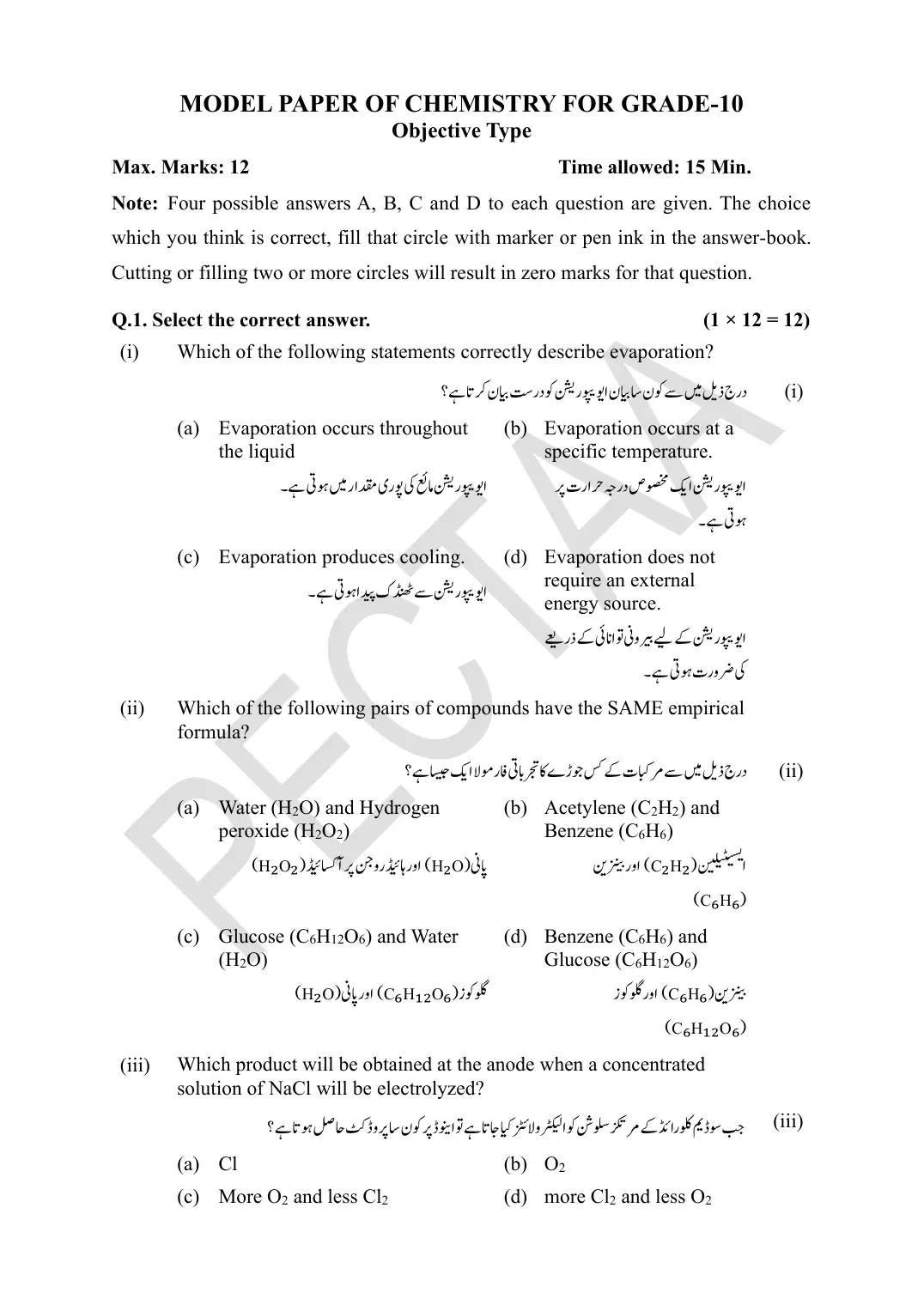
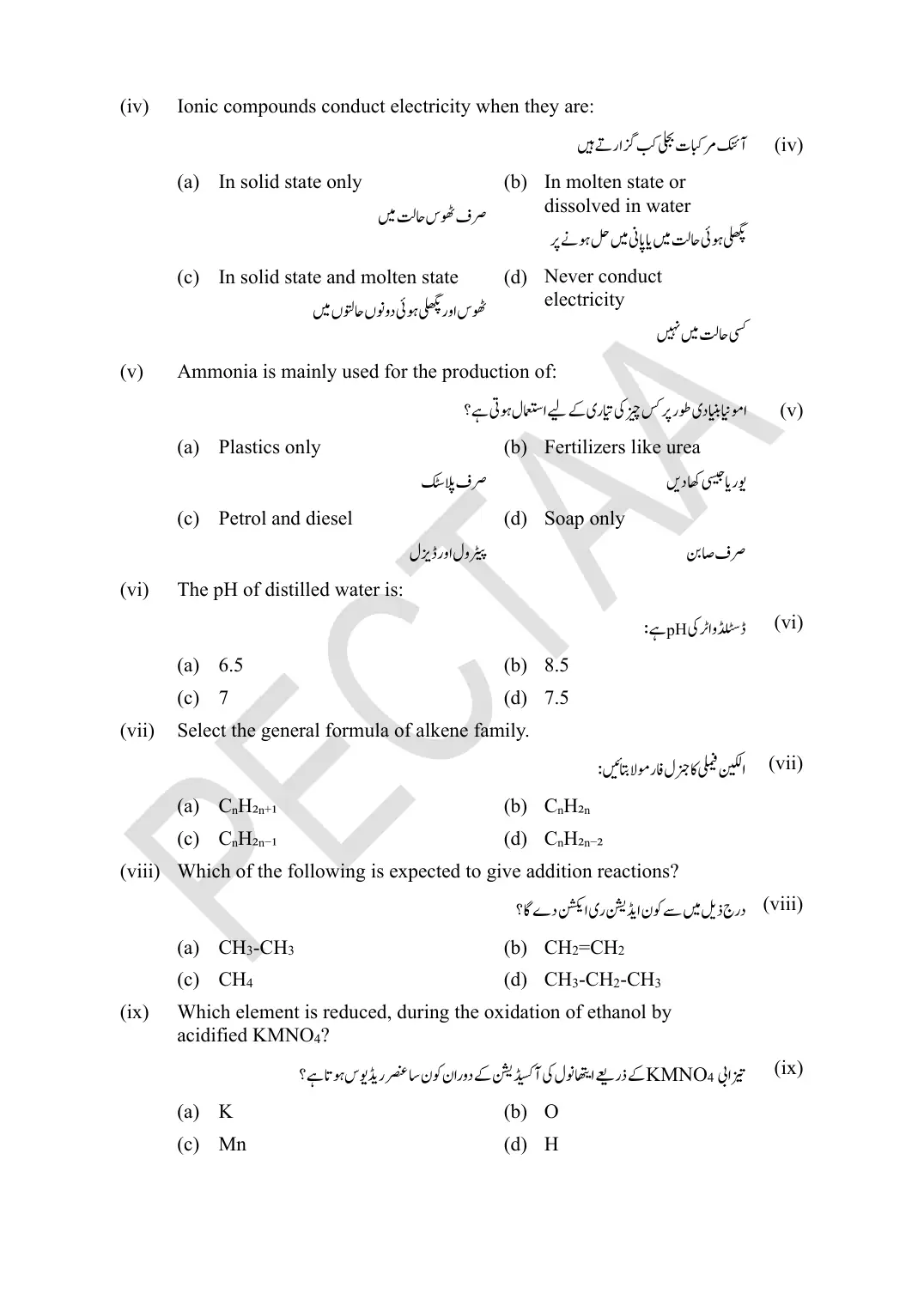
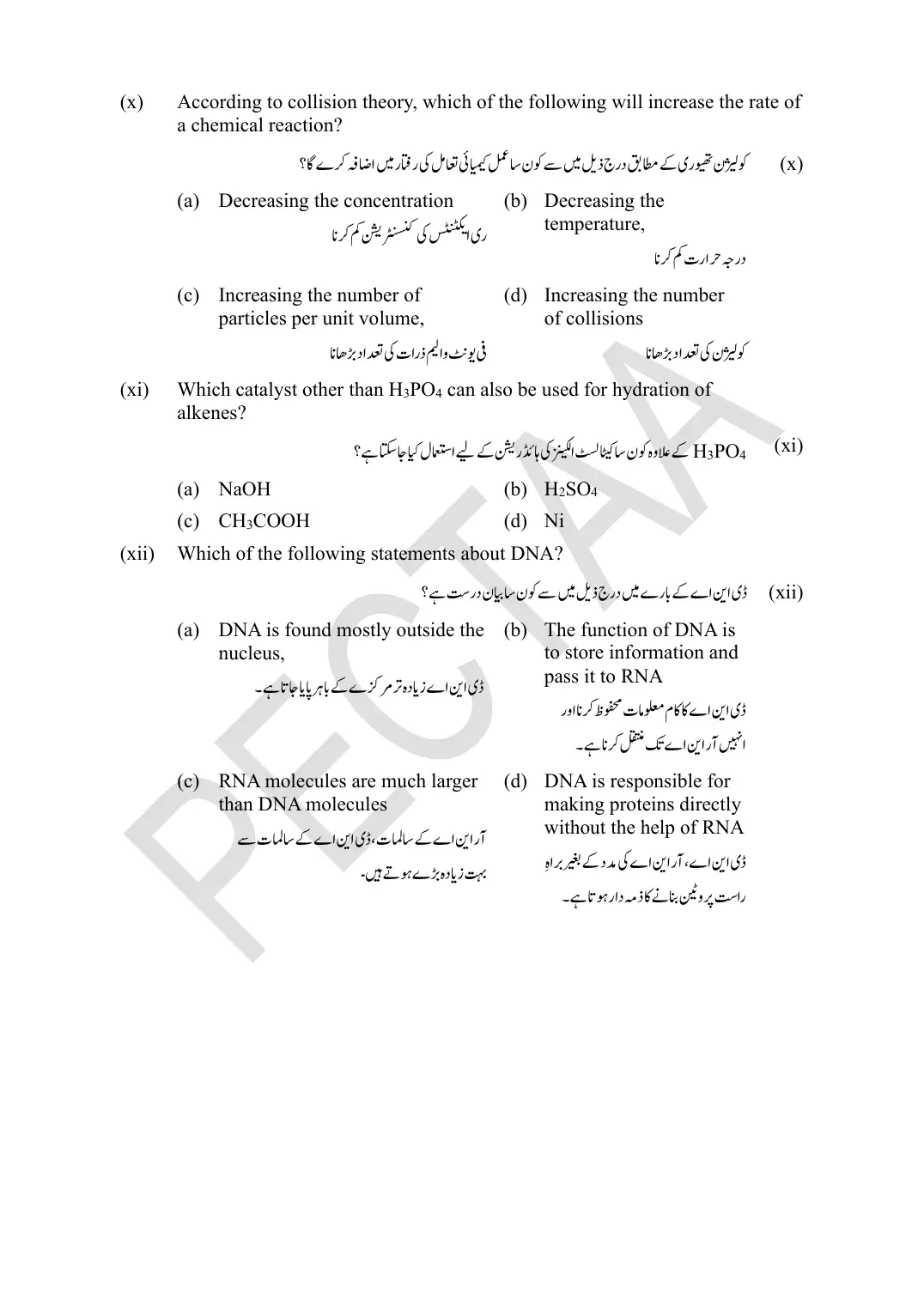
| Q.1 | 12 MCQs: one from each chapter except chapter 25 (chapters 14 to 24 and chapter 26). | 1 × 12 = 12 |
| Part II: Short answers | ||
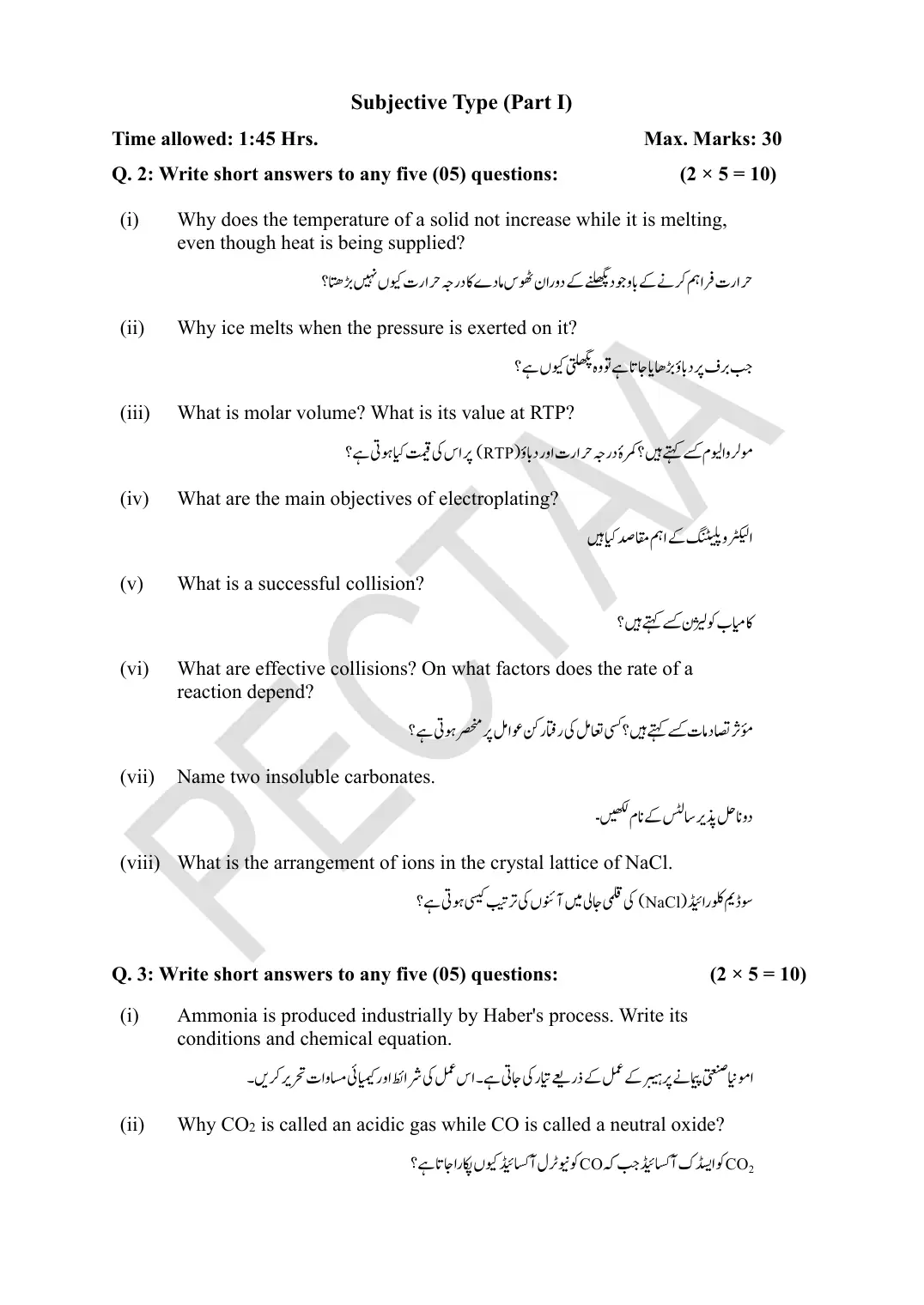
| Q.2 | Attempt 5 of 8: two each from chapters 14, 17 and 18, one each from chapters 15 and 16. | 2 × 5 = 10 |
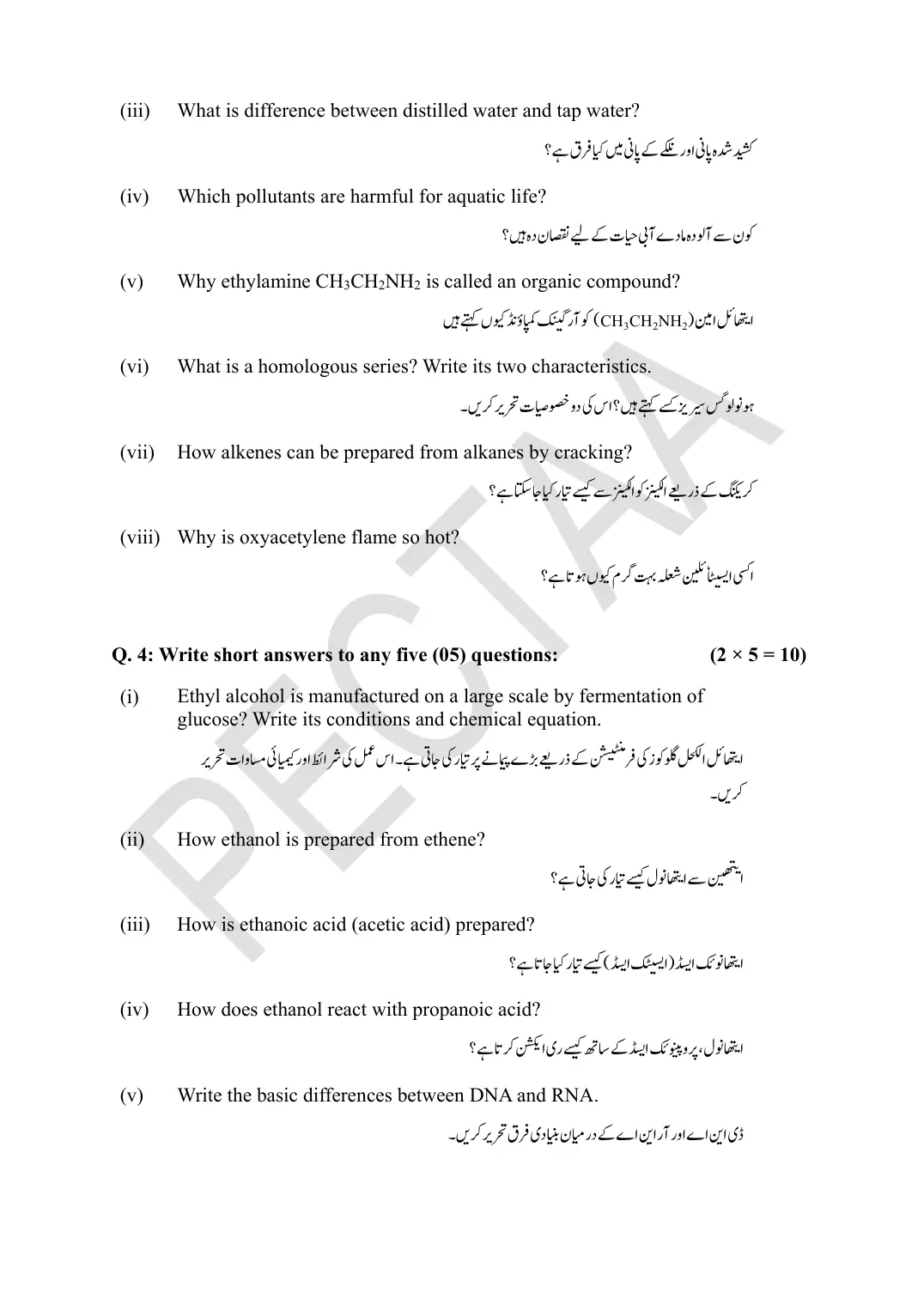
| Q.3 | Attempt 5 of 8: two each from chapters 19, 20, 21 and 22. | 2 × 5 = 10 |
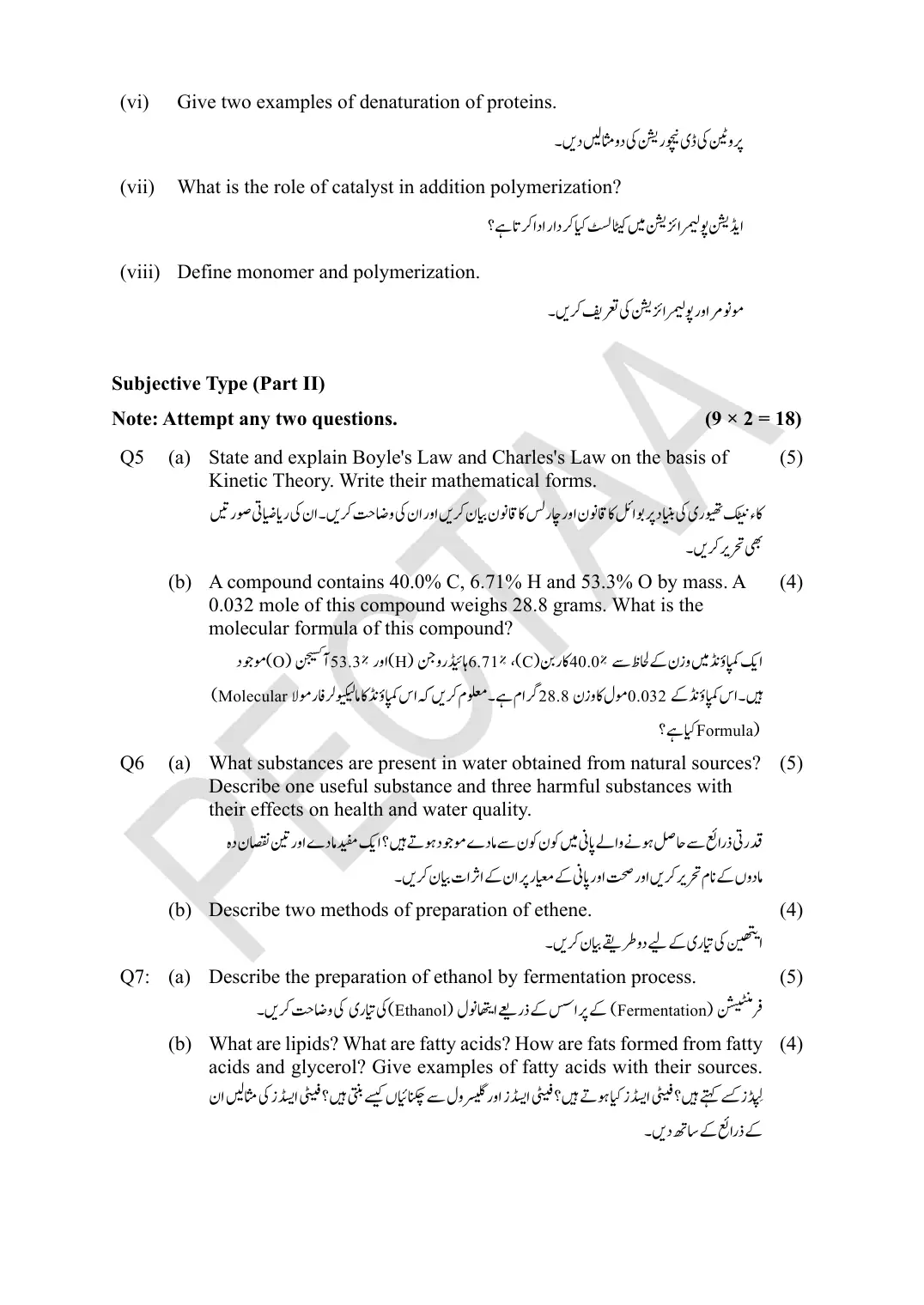
| Q.4 | Attempt 5 of 8: two each from chapters 23, 24, 25 and 26. | 2 × 5 = 10 |
| Part III: Detailed answers | ||
| Q.5 | (a) chapter 14, (b) chapter 15. | 5 + 4 |
| Q.6 | (a) chapter 20, (b) chapter 22. | 5 + 4 |
| Q.7 | (a) chapter 23, (b) chapter 25. Attempt any 2 of Q.5 to Q.7 (2 × 9 = 18). | 5 + 4 |
Each detailed question has two parts: (a) for 5 marks and (b) for 4 marks. PECTAA notes that this scheme is the same as the one printed in the Chemistry 10 textbook.
parho.online
The paper at a glance
The Class 10 Chemistry board paper for 2027 carries 60 marks and lasts 2 hours. 12 marks are multiple-choice questions on the bubble sheet; the other 48 are written answers. The scheme fixes which chapters each question is set from, so you can see where every mark comes from before you plan your revision.
Where the questions come from, chapter by chapter
Each chapter and the questions the scheme sets from it.
| Chapter | Questions it feeds |
|---|---|
| Chapter 14States of Matter and Phase Changes | Q.1Q.2Q.5 |
| Chapter 15Stoichiometry | Q.1Q.2Q.5 |
| Chapter 16Electrochemistry | Q.1Q.2 |
| Chapter 17Reaction Kinetics | Q.1Q.2 |
| Chapter 18Salts | Q.1Q.2 |
| Chapter 19Nitrogen and Sulphur | Q.1Q.3 |
| Chapter 20Water | Q.1Q.3Q.6 |
| Chapter 21Organic Chemistry | Q.1Q.3 |
| Chapter 22Hydrocarbons | Q.1Q.3Q.6 |
| Chapter 23Monohydroxy Alkanes and Alcohols | Q.1Q.4Q.7 |
| Chapter 24Carboxylic Acid | Q.1Q.4 |
| Chapter 25Biochemistry | Q.4Q.7 |
| Chapter 26Polymers | Q.1Q.4 |
How to prepare with this scheme
- Start with chapters 14, 15, 20, 22 and 23: they feed the most questions in this paper.
- The objective part is 12 marks. It rewards quick recall of definitions, facts and key terms, so drill MCQs from every chapter it names.
- You choose within questions (attempt 5 of 8), so a firm grip on most of each group beats a thin grip on all of it. Don’t skip a whole chapter, though: the choice is within the group, not across the paper.
- Sit at least one full past paper in 2 hours, then mark it against this scheme to see which questions cost you the most.
Questions students ask
How many marks is the Class 10 Chemistry paper in 2027?
60 marks in 2 hours: 12 objective marks and 48 for written answers.
What is in the objective part?
12 marks (20% of the paper). Q.1: 12 MCQs: one from each chapter except chapter 25 (chapters 14 to 24 and chapter 26).
How many marks do I need to pass Class 10 Chemistry?
The Punjab boards pass a subject at 33 percent: 20 of 60 marks.
Which chapters matter most in Class 10 Chemistry?
Chapters 14, 15, 20, 22 and 23 feed the most questions: 3 each in the scheme. Start your revision there.
Is this pairing scheme the same for every Punjab board?
Yes. PECTAA sets one scheme for the 2027 exams of all nine Punjab boards: Lahore, Gujranwala, Faisalabad, Multan, Rawalpindi, Sargodha, Bahawalpur, Dera Ghazi Khan and Sahiwal.
From the official notification
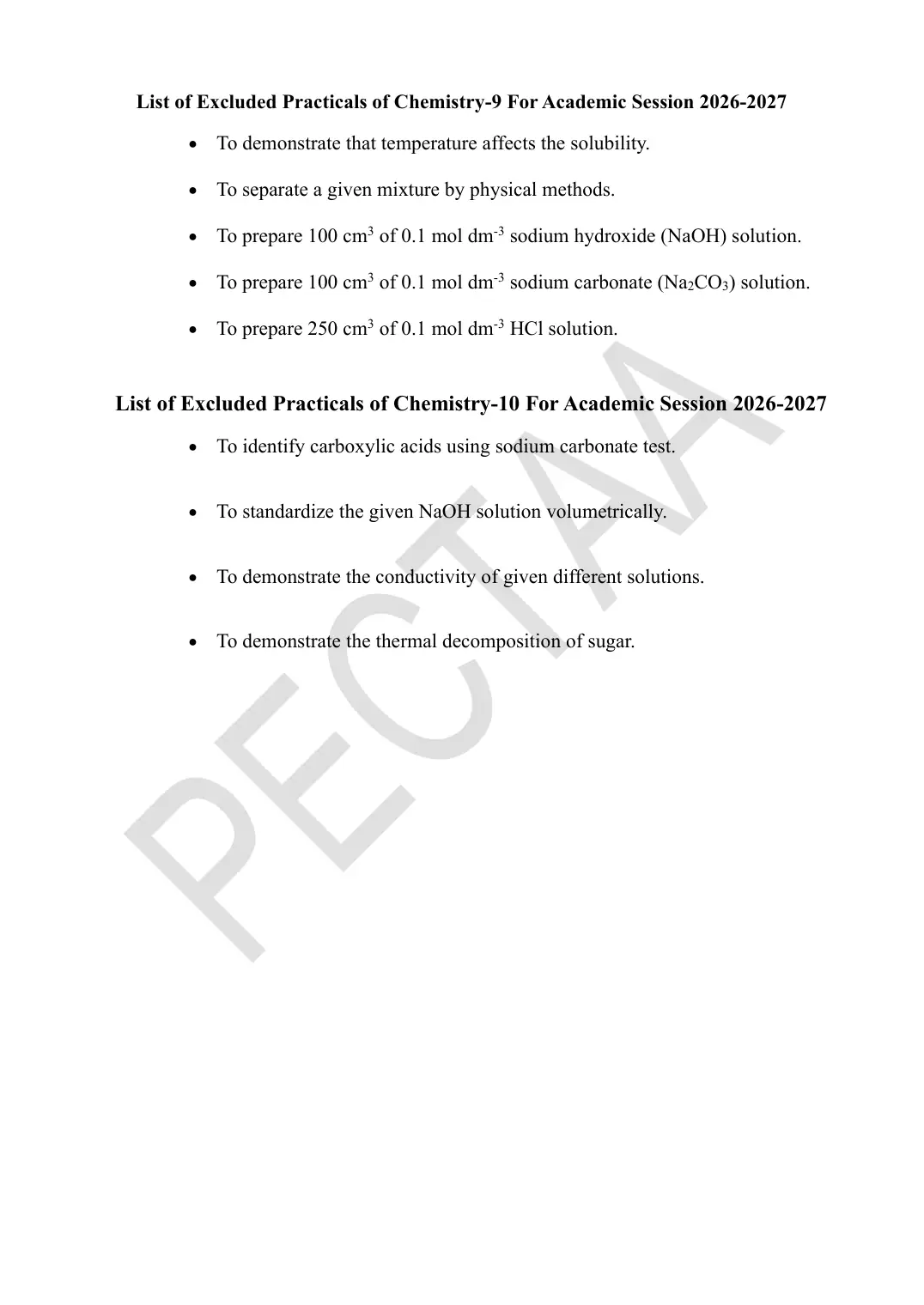
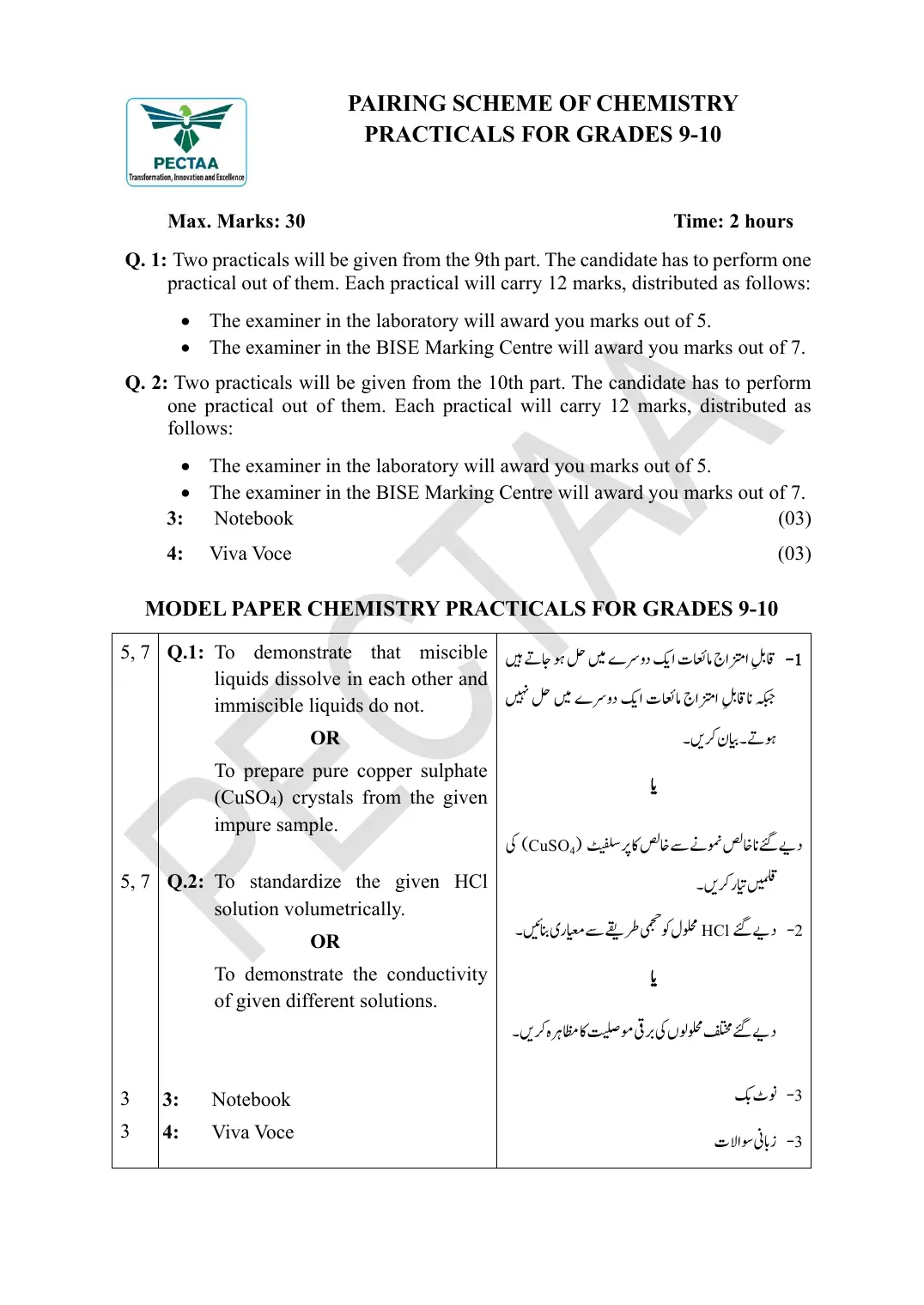
PECTAA notification PECTAA/C&C Unit/2026/1257, dated 14 November 2026. The pages for Class 10 Chemistry, as PECTAA issued them. Tap a page to open it full size.
The pairing scheme pages
The model paper
Now practise what is still in
Free chapter tests for Class 10 Chemistry, marked the moment you finish.