
Class 10 · BISE Annual Examination 2027
Class 10 Chemistry Smart Syllabus 2027
What PECTAA has taken out of the Class 10 Chemistry book for the 2027 board exams. Anything not listed here can still be asked.
0whole chapters removed
96topics and questions removed
0changed in this notification
PECTAA has taken these topics and exercise questions out of the Chemistry 10 textbook (chapters 14 to 26) for the 2027 exams. Every other part of the book can be asked.
Removed, chapter by chapter
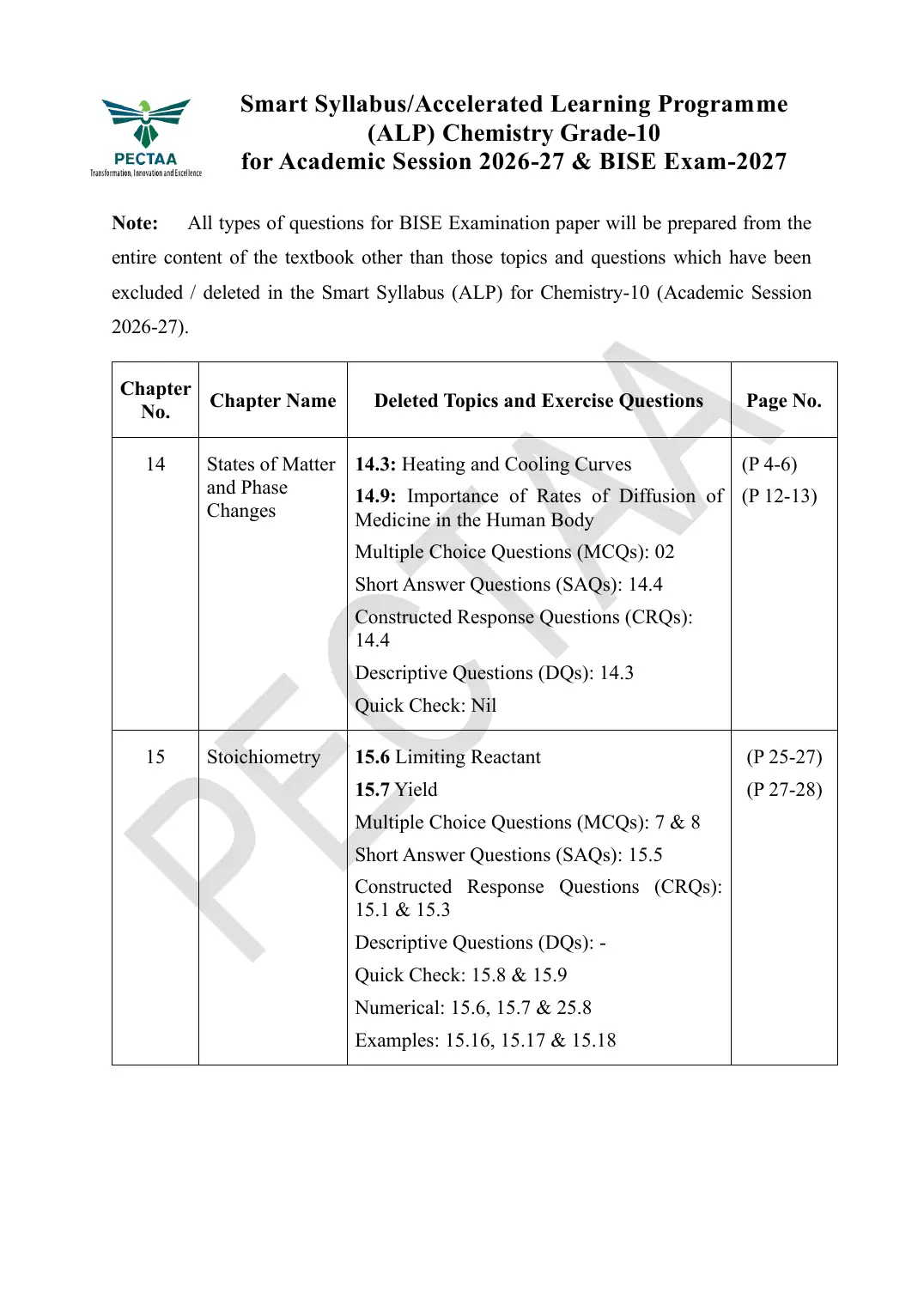
- 14.3 Heating and cooling curves (pages 4-6)
- 14.9 Importance of rates of diffusion of medicine in the human body (pages 12-13)
- Exercise MCQ 2
- Short answer question 14.4
- Constructed response question 14.4
- Descriptive question 14.3
- 15.6 Limiting reactant (pages 25-27)
- 15.7 Yield (pages 27-28)
- Exercise MCQs 7 and 8
- Short answer question 15.5
- Constructed response questions 15.1 and 15.3
- Quick check 15.8 and 15.9
- Numericals 15.6, 15.7 and 25.8 (as printed; read 15.8)
- Examples 15.16, 15.17 and 15.18
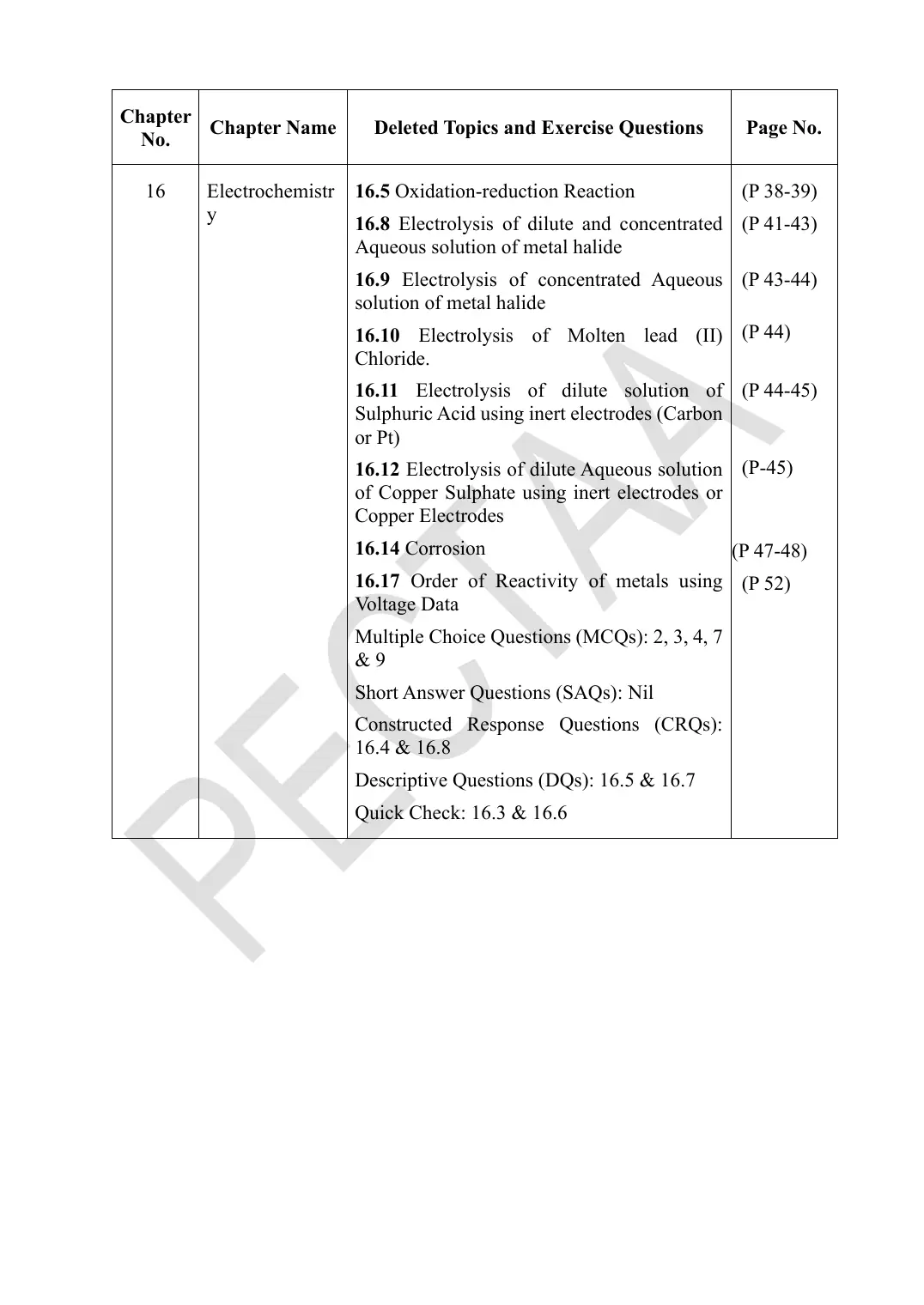
- 16.5 Oxidation-reduction reaction (pages 38-39)
- 16.8 Electrolysis of dilute and concentrated aqueous solution of metal halide (pages 41-43)
- 16.9 Electrolysis of concentrated aqueous solution of metal halide (pages 43-44)
- 16.10 Electrolysis of molten lead (II) chloride (page 44)
- 16.11 Electrolysis of dilute solution of sulphuric acid using inert electrodes (carbon or Pt) (pages 44-45)
- 16.12 Electrolysis of dilute aqueous solution of copper sulphate using inert electrodes or copper electrodes (page 45)
- 16.14 Corrosion (pages 47-48)
- 16.17 Order of reactivity of metals using voltage data (page 52)
- Exercise MCQs 2, 3, 4, 7 and 9
- Constructed response questions 16.4 and 16.8
- Descriptive questions 16.5 and 16.7
- Quick check 16.3 and 16.6
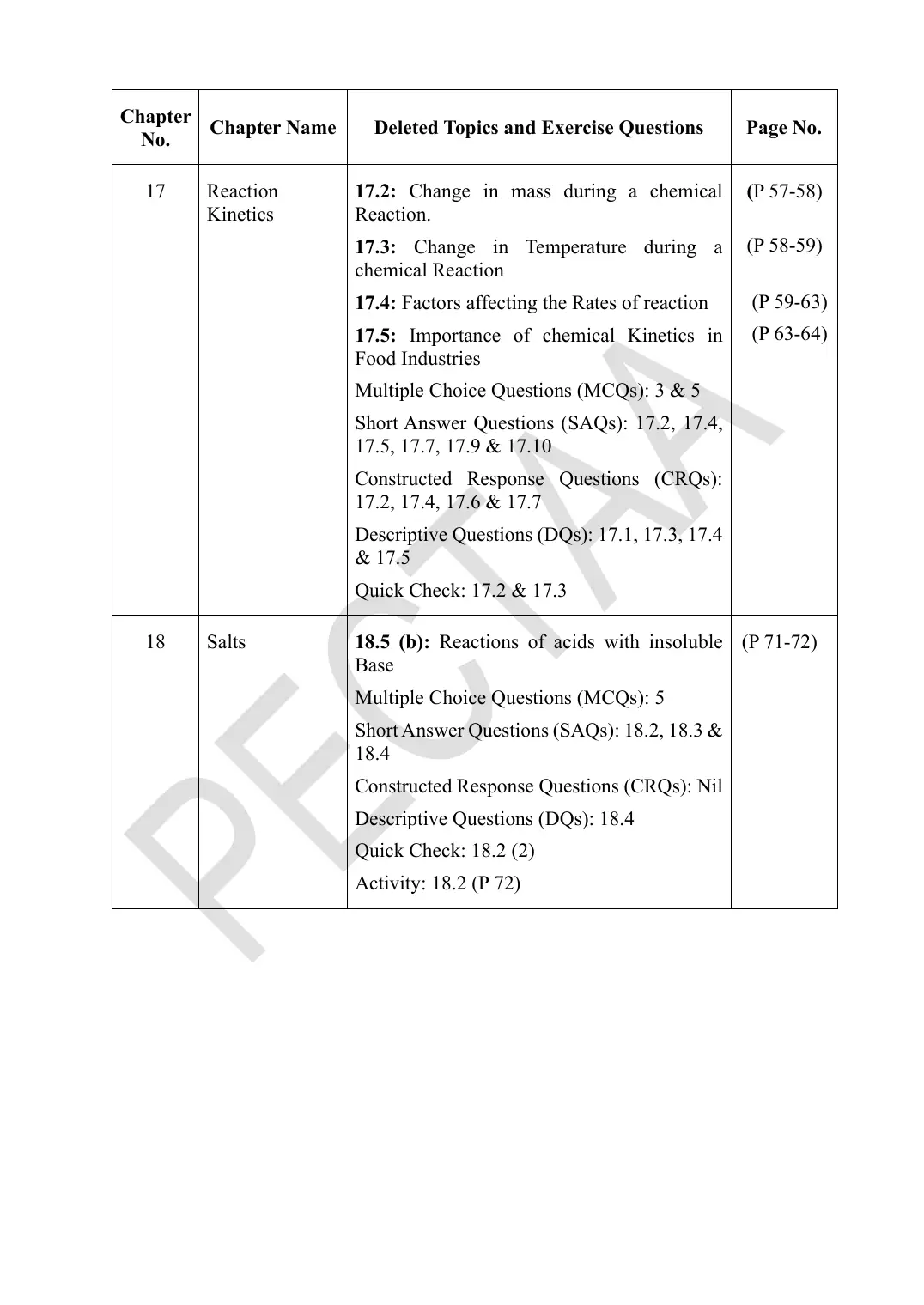
- 17.2 Change in mass during a chemical reaction (pages 57-58)
- 17.3 Change in temperature during a chemical reaction (pages 58-59)
- 17.4 Factors affecting the rates of reaction (pages 59-63)
- 17.5 Importance of chemical kinetics in food industries (pages 63-64)
- Exercise MCQs 3 and 5
- Short answer questions 17.2, 17.4, 17.5, 17.7, 17.9 and 17.10
- Constructed response questions 17.2, 17.4, 17.6 and 17.7
- Descriptive questions 17.1, 17.3, 17.4 and 17.5
- Quick check 17.2 and 17.3
- 18
Salts
- 18.5 (b) Reactions of acids with insoluble base (pages 71-72)
- Exercise MCQ 5
- Short answer questions 18.2, 18.3 and 18.4
- Descriptive question 18.4
- Quick check 18.2 (2)
- Activity 18.2 (page 72)
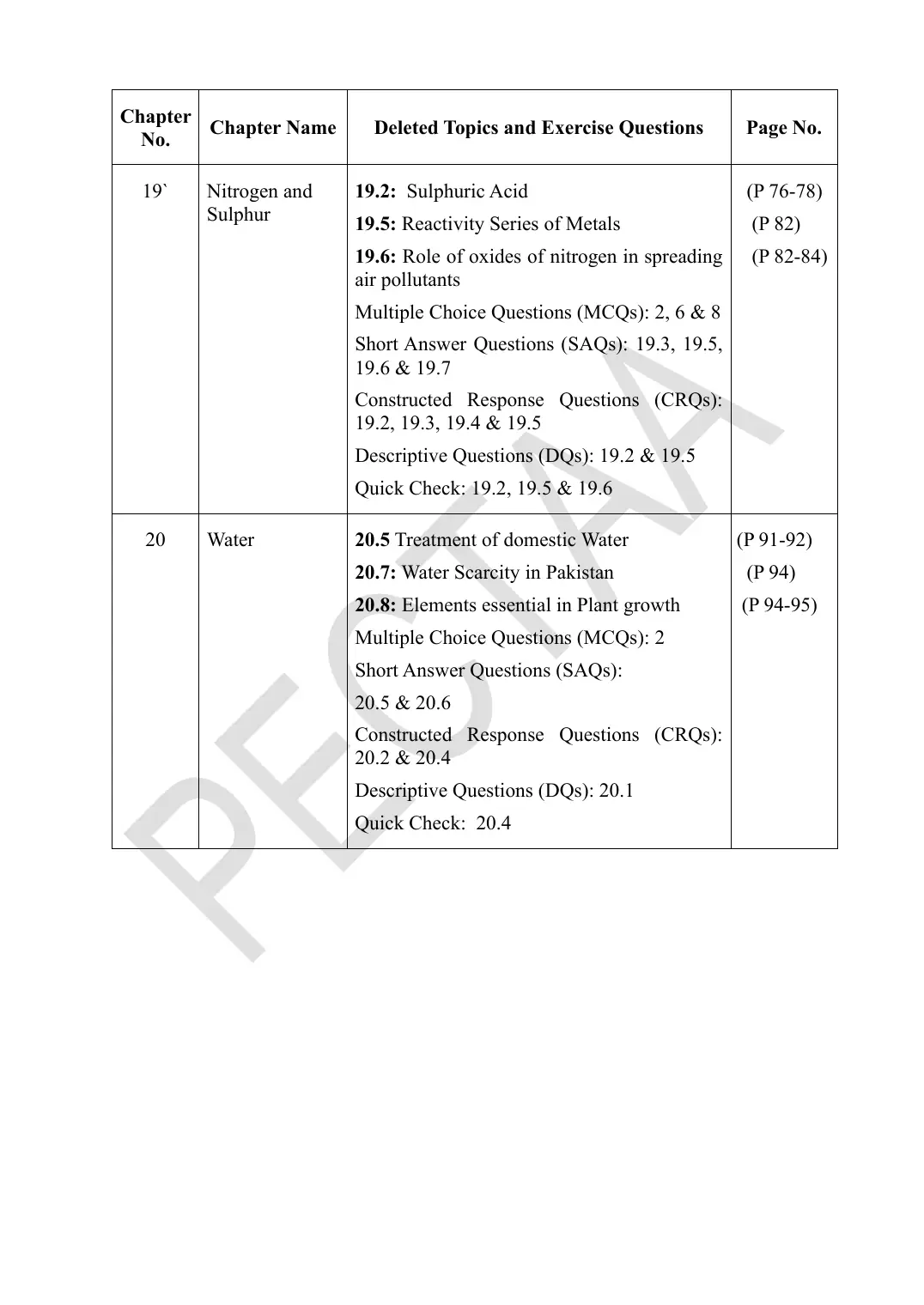
- 19.2 Sulphuric acid (pages 76-78)
- 19.5 Reactivity series of metals (page 82)
- 19.6 Role of oxides of nitrogen in spreading air pollutants (pages 82-84)
- Exercise MCQs 2, 6 and 8
- Short answer questions 19.3, 19.5, 19.6 and 19.7
- Constructed response questions 19.2, 19.3, 19.4 and 19.5
- Descriptive questions 19.2 and 19.5
- Quick check 19.2, 19.5 and 19.6
- 20
Water
- 20.5 Treatment of domestic water (pages 91-92)
- 20.7 Water scarcity in Pakistan (page 94)
- 20.8 Elements essential in plant growth (pages 94-95)
- Exercise MCQ 2
- Short answer questions 20.5 and 20.6
- Constructed response questions 20.2 and 20.4
- Descriptive question 20.1
- Quick check 20.4
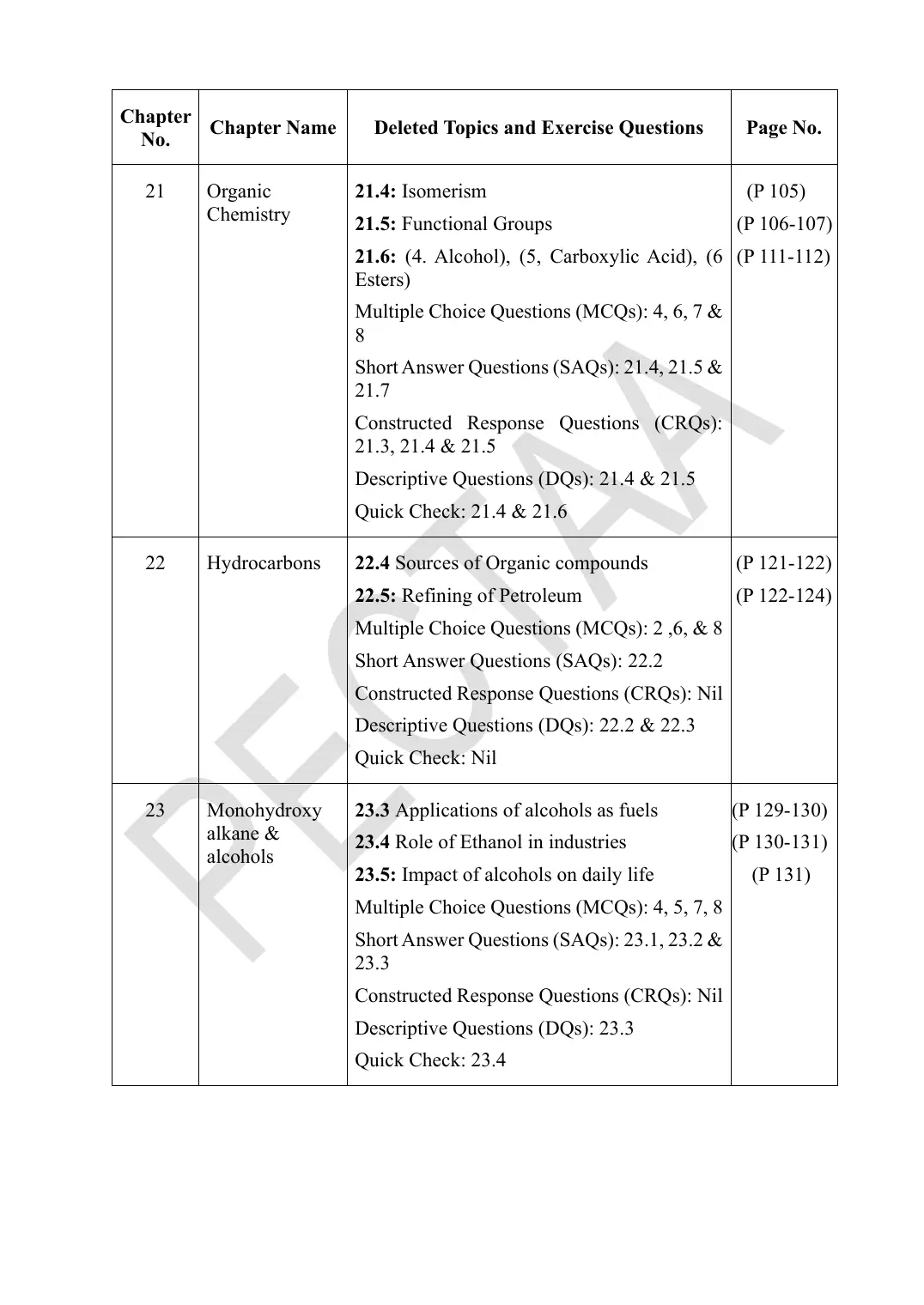
- 21.4 Isomerism (page 105)
- 21.5 Functional groups (pages 106-107)
- 21.6 (4) Alcohol, (5) Carboxylic acid, (6) Esters (pages 111-112)
- Exercise MCQs 4, 6, 7 and 8
- Short answer questions 21.4, 21.5 and 21.7
- Constructed response questions 21.3, 21.4 and 21.5
- Descriptive questions 21.4 and 21.5
- Quick check 21.4 and 21.6
- 22.4 Sources of organic compounds (pages 121-122)
- 22.5 Refining of petroleum (pages 122-124)
- Exercise MCQs 2, 6 and 8
- Short answer question 22.2
- Descriptive questions 22.2 and 22.3
- 23.3 Applications of alcohols as fuels (pages 129-130)
- 23.4 Role of ethanol in industries (pages 130-131)
- 23.5 Impact of alcohols on daily life (page 131)
- Exercise MCQs 4, 5, 7 and 8
- Short answer questions 23.1, 23.2 and 23.3
- Descriptive question 23.3
- Quick check 23.4
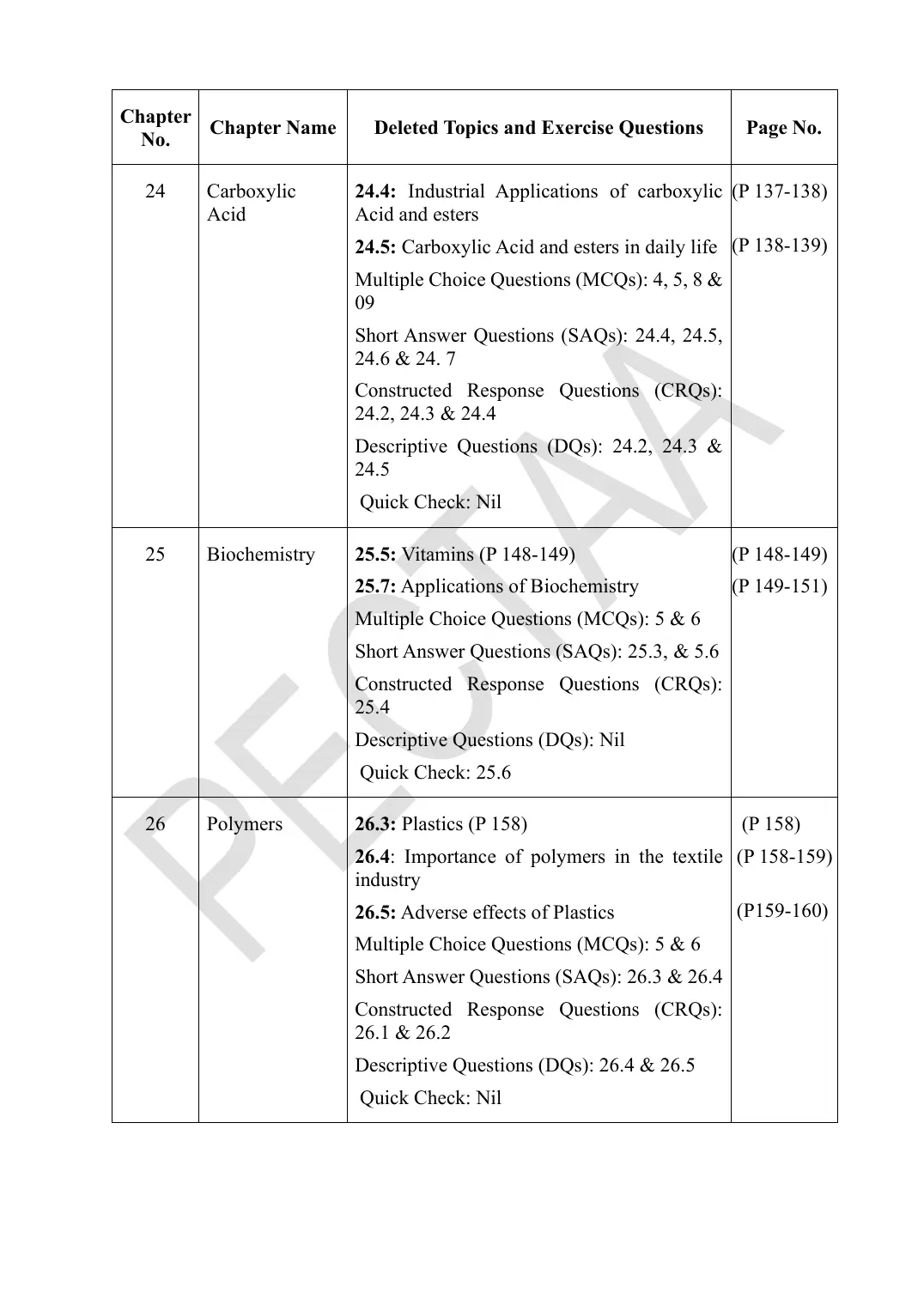
- 24.4 Industrial applications of carboxylic acid and esters (pages 137-138)
- 24.5 Carboxylic acid and esters in daily life (pages 138-139)
- Exercise MCQs 4, 5, 8 and 9
- Short answer questions 24.4, 24.5, 24.6 and 24.7
- Constructed response questions 24.2, 24.3 and 24.4
- Descriptive questions 24.2, 24.3 and 24.5
- 25.5 Vitamins (pages 148-149)
- 25.7 Applications of biochemistry (pages 149-151)
- Exercise MCQs 5 and 6
- Short answer questions 25.3 and 5.6 (as printed; read 25.6)
- Constructed response question 25.4
- Quick check 25.6
- 26
Polymers
- 26.3 Plastics (page 158)
- 26.4 Importance of polymers in the textile industry (pages 158-159)
- 26.5 Adverse effects of plastics (pages 159-160)
- Exercise MCQs 5 and 6
- Short answer questions 26.3 and 26.4
- Constructed response questions 26.1 and 26.2
- Descriptive questions 26.4 and 26.5
From the official notification
PECTAA notification PECTAA/C&C Unit/2026/1257, dated 14 November 2026. The pages for Class 10 Chemistry, as PECTAA issued them. Tap a page to open it full size.
How the paper is set
60 marks in 2 hours: 12 objective and 48 subjective. See which chapters each question comes from.
Class 10 Chemistry pairing schemeNow practise what is still in
Free chapter tests for Class 10 Chemistry, marked the moment you finish.